

WomensGolf.com — Discovery Slider v3.3
How do I get more distance off the tee? Need driver distance? Try Lesson Discovery →
Why am I hitting my irons fat? Iron contact issues? Identify Your Focus Here →
How do I get out of bunkers more easily? Stuck in bunkers? Find Your Starting Point →
Help me stop missing short putts? Putting problems? Get Jane's First Check →
I need more confidence on the course Lacking confidence? Take the 30-Second Quiz →
Never lose a lesson again. Save videos to your own library.

The Chest-Driven Takeaway for a More Powerful Swing

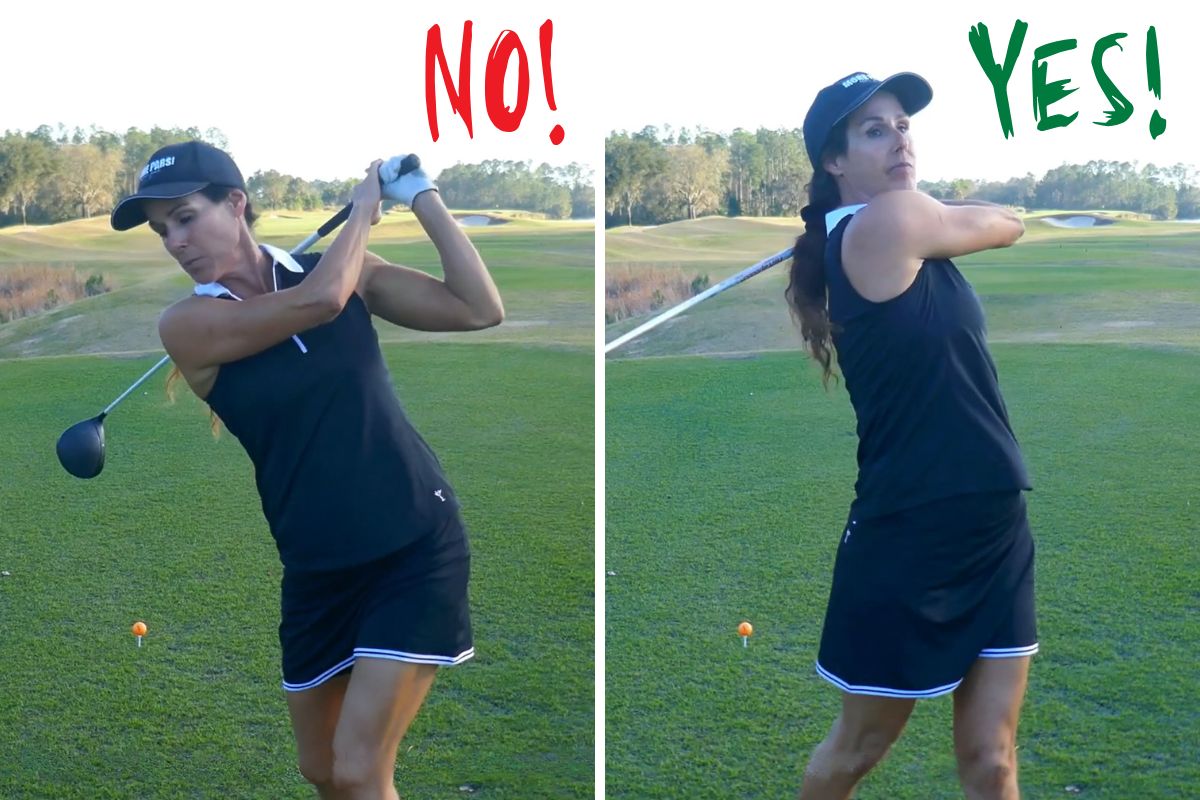
A solid golf swing starts right out of the gate with a connected takeaway. Christina Ricci demonstrates how to use your chest as the primary driver of the backswing while keeping your upper arms connected to your torso. By avoiding excessive hip rotation early in the swing, you prevent your hands from getting stuck "too deep," allowing the club to hinge naturally and vertically for a more powerful and repeatable rotation.
Show/Hide Notes and Q&A

Lesson Notes

  • The Connection Rule: Keep your upper arms connected to your torso. Your forearms should be the only part of the arm unit moving freely in the “light breeze.”
  • The Takeaway Driver: The chest should drive the initial movement of the club, not the hands or the hips.
  • Hip Management:
    • Early Swing: Avoid excessive hip rotation “right out of the gate.”
    • Late Swing: Let the hips react naturally as you complete your rotation at the top.
    • The Risk: Over-rotating the hips too early pulls the hands too deep (behind the body), making it difficult to find a consistent path back to the ball.
  • The Hinge: Focus on keeping the clubhead low initially, then allow for a natural vertical hinge as the hands reach chest height.

Q&A

Q: Why is the chest-to-arm connection so important during the takeaway? A: Keeping your upper arms connected to your torso ensures that the club, hands, and chest move as a single unit. This synchronization prevents the arms from wandering off-plane and helps maintain a consistent swing arc.

Q: What happens if I rotate my hips too much at the start of the swing? A: Excessive early hip rotation typically causes the hands to move too far “inside” or “deep” behind the torso. This often leads to a trapped position, forcing you to compensate during the downswing, which usually results in inconsistent contact.

Q: When should the club start to hinge? A: After a low, chest-driven takeaway where the hands stay in line with the chest, the club should naturally begin to hinge vertically. This transition happens as you move from the initial takeaway into the completion of your full body rotation.

Women's Golf Membership

  • Personalized Recommendations from Jane tailored directly to your profile.
  • Expert Teachers: 1,300+ lessons from 28 top female instructors.
  • The Weekend Game Plan: Jane's weekly newsletter with all the new lessons.
  • 25 guided improvement pathways: Step-by-step roadmaps.
  • Never Lose a Lesson Again. Save your favorite videos to your personal library.
  • Private Community: Our friendly moderated worldwide members' group.
Compare Membership Options
🔒 30-Day Money-Back Guarantee

After You Join

  1. 1 Complete your member profile by describing your game and game improvement priorities.
  2. 2 Explore the platform by browsing lessons, following guided courses, and saving videos to your personal library.
  3. 3 Connect with others by joining our private worldwide members' community whenever you are ready.
  4. 4 Check your inbox for your welcome email with everything you need to make the most of your membership.
  5. 5 Receive your personalized recommendations from Jane within 24 hours, tailored directly to your profile.

Find Your Next Lesson

Planning Your Shot with Playable Yardage - Cindy Miller
Smart Course Strategy: Calculating Playable Yardage
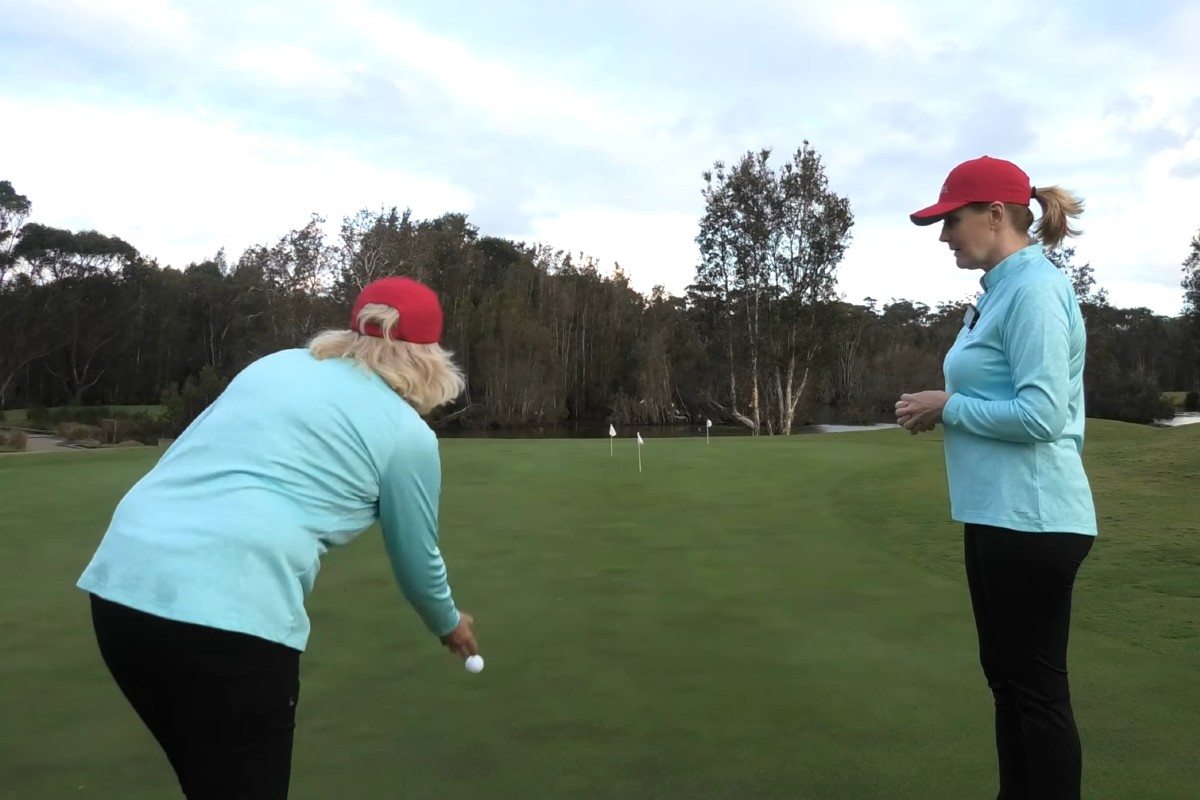
Don't ignore the conditions and miss the shot. Cindy Miller shares her course management strategy for approach shots: accurately calculating playable yardage by factoring in conditions, and then choosing a club and aim point that minimizes risk.
Escape Fairway Bunkers with Your Favorite Lofted Hybrid - Kellie Stenzel - Womens Golf
Escape Fairway Bunkers with Your Favorite Lofted Hybrid
Learn how to use your 5 or 6-hybrid to escape fairway bunkers with ease. Kellie Stenzel shares the simple setup and swing adjustments needed to take sand and get the ball back in play.
Make a Full Backswing for Better Bunker Shots - Kellie Stenzel - Womens Golf
Make a Full Backswing for Better Bunker Shots
Stop leaving your shots in the bunker. Kellie Stenzel demonstrates why a full backswing is the key to escaping greenside bunkers. By taking a full, confident swing, you can throw enough sand to get the ball out and closer to the hole.
" "

Live Lesson Favorites

Videos currently being watched by Women’s Golf members

Stop Duffing Your Irons - Fix Your Low Point - Nathalie Sheehan - Womens Golf
Stop Duffing Your Irons: Fix Your Low Point
If you struggle with thin or heavy iron shots, your swing is bottoming out too early. Nathalie Sheehan shares a simple drill using only your golf towel to guarantee clean, ball-first contact.
How to grip the putter - Karen Palacios Jansen
A Simple Guide to the Perfect Putter Grip
Karen Palacios Jansen shows why the putter grip is unique. Learn the proper hand placement and the popular reverse overlap grip to minimize wrist action and improve your consistency on the green.
Playing Long Bunker Shots - Christina Ricci
Mastering Long Greenside Bunker Shots
Escape elevated, long-range bunkers with ease. LPGA Instructor Christina Ricci shows why your sand wedge might be the wrong choice and how to "pick" the ball perfectly for more distance.

Our personalised lesson recommendations and step‑by‑step improvement pathways are designed especially for women who are new to golf. They bring together the right lessons in the right order, helping you build confidence, develop solid fundamentals, and enjoy steady progress from your very first steps.

Guest lessons are limited – Join for full benefits