


Lesson Notes: Rethinking the Weight Shift
The Goal: To replace an over-exaggerated, lateral sliding motion with a controlled, centered body pivot to protect swing timing and optimize ball striking.
The Danger of Exaggeration
- The Movement Trap: Golfers frequently overdo traditional swing advice like widening the takeaway or shifting weight. Exaggerating these actions creates a violent side-to-side slide that severely disrupts rhythm and timing.
- Poor Contact: Physically pushing the body weight too far back and forth causes the club to bottom out early, resulting in hitting behind the ball or topping it entirely.
Shift as a Centered Pivot
Instead of moving your entire mass laterally, treat the weight transition as a compact turn around your hips:
- Backswing Pivot: Turn your back completely to the target by pivoting around your back hip and loading pressure into your back foot without sliding your head off the ball.
- The Reset: Before firing forward, quickly return your pelvis back to the original address position right before impact.
- Downswing Pivot: Rotate smoothly off your back foot onto your front leg, keeping your head centered over the ball to finish in total balance.
The Three-Part Groove Drill
Practice this breakdown sequence to instill the correct physical muscle memory:
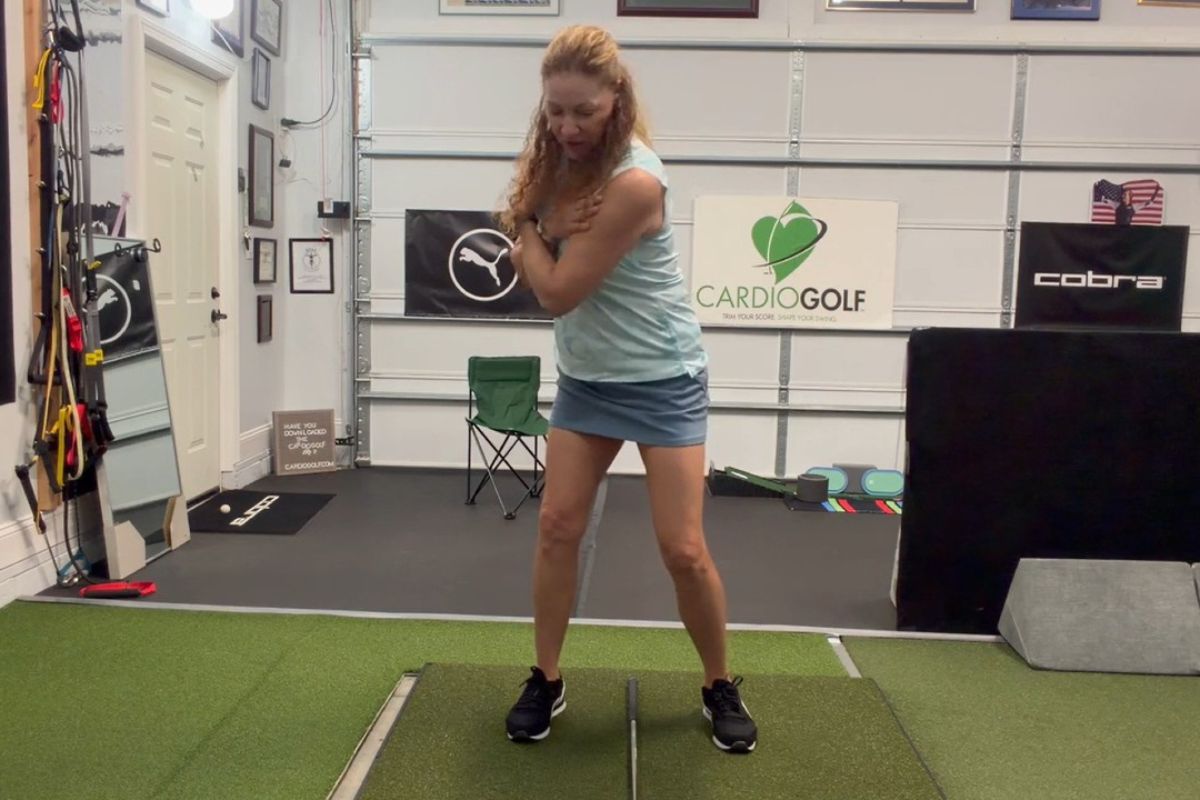
- Setup: Place a golf club flat on the ground in the middle of your stance to represent your baseline ball position. Cross your arms securely over your chest.
- Part 1 (Turn): Pivot around your back hip to face your back to the target.
- Part 2 (Reset): Slide your pelvis briefly back to the center address alignment.
- Part 3 (Release): Pivot around your front foot into a balanced finish position, then practice blending all three segments into a singular fluid motion.
FAQ
Q: How can I tell if my backswing is a correct pivot or an incorrect slide?
A: Look at your head and hip position relative to the center club on the ground. During a proper pivot, your head stays steady and centered over the ball while your weight flows naturally into your back hip. If your entire upper body and head visibly drift away from the target line, you are sliding rather than turning.
Q: Why is the small pelvic “reset” so vital before turning toward the target?
A: Skipping the reset and instantly firing your hips directly from the top of the backswing throws your upper and lower body out of sync. Bringing the pelvis back to your original address position smoothly restructures your alignment, allowing the club to travel down on the optimal path without early or forced adjustments.