

Lesson Notes: Ditching the Flick Around the Greens
The Goal: To eliminate the destructive habit of flicking the wrists through impact by developing trust in the club’s loft, maintaining a relaxed grip, and establishing a smooth, rhythmic tempo.
Why the “Flick” Happens
- Lack of Trust: The primary cause is mental. A lack of confidence in your setup, landing spot, or the shot itself creates physical tension, leading players to try and manually “help” the ball into the air rather than trusting the club’s natural loft and grooves.
- Grip Tension and Rigid Tempo: When your body gets tense, your tempo quickens and becomes rigid, causing the club to strike the top half of the ball. Short game shots require finesse and a light grip pressure—aim for a 3 on a 1-to-10 scale.
- Improper Backswing Length: If your backstroke is super short, you are forced to flick your wrists at the ball to generate enough force. Conversely, making a massive backswing often leads to deceleration, which prompts a last-second flick to make up for it.
The Tee-Push Drill
Use this immediate-feedback exercise to feel the soft, connected motion required for solid chipping:
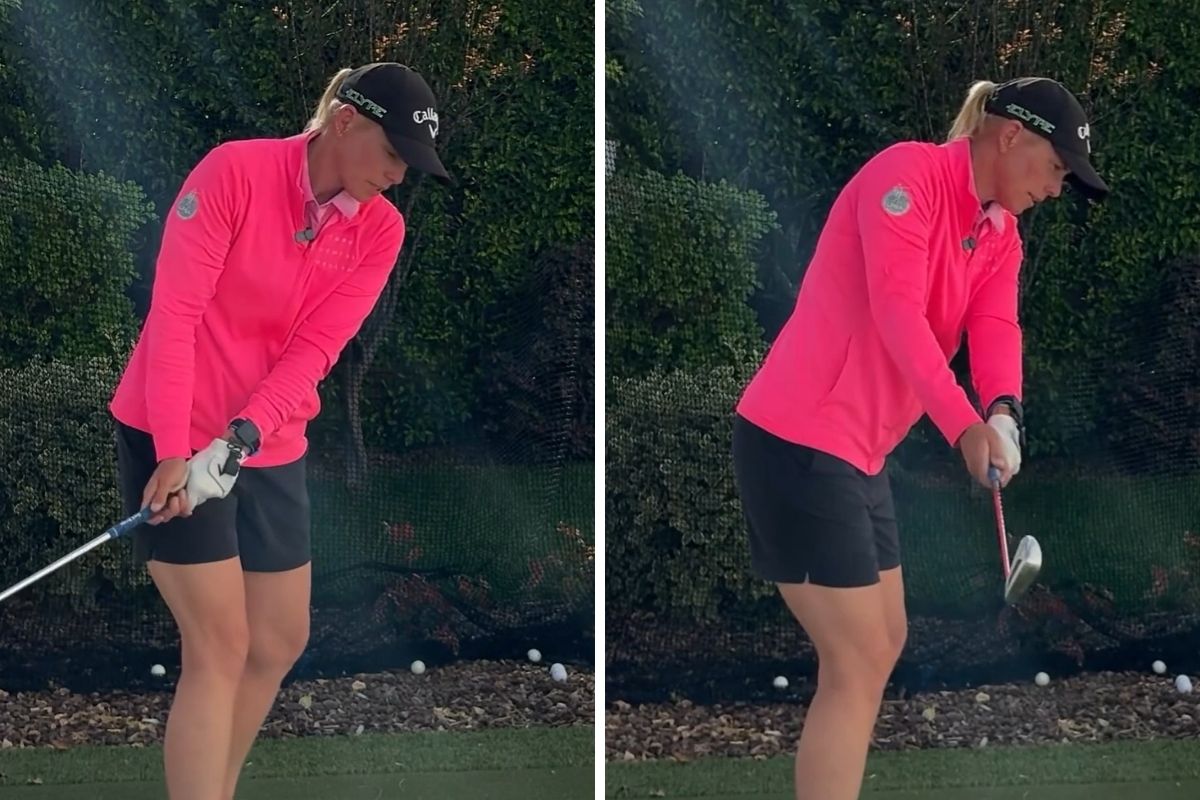
- Setup: Place a golf tee flat on the ground. Position your clubhead directly behind the head of the tee. You do not need a golf ball for this practice.
- The Move: Without taking any backstroke at all, simply use your core and center to softly push the tee forward along the grass.
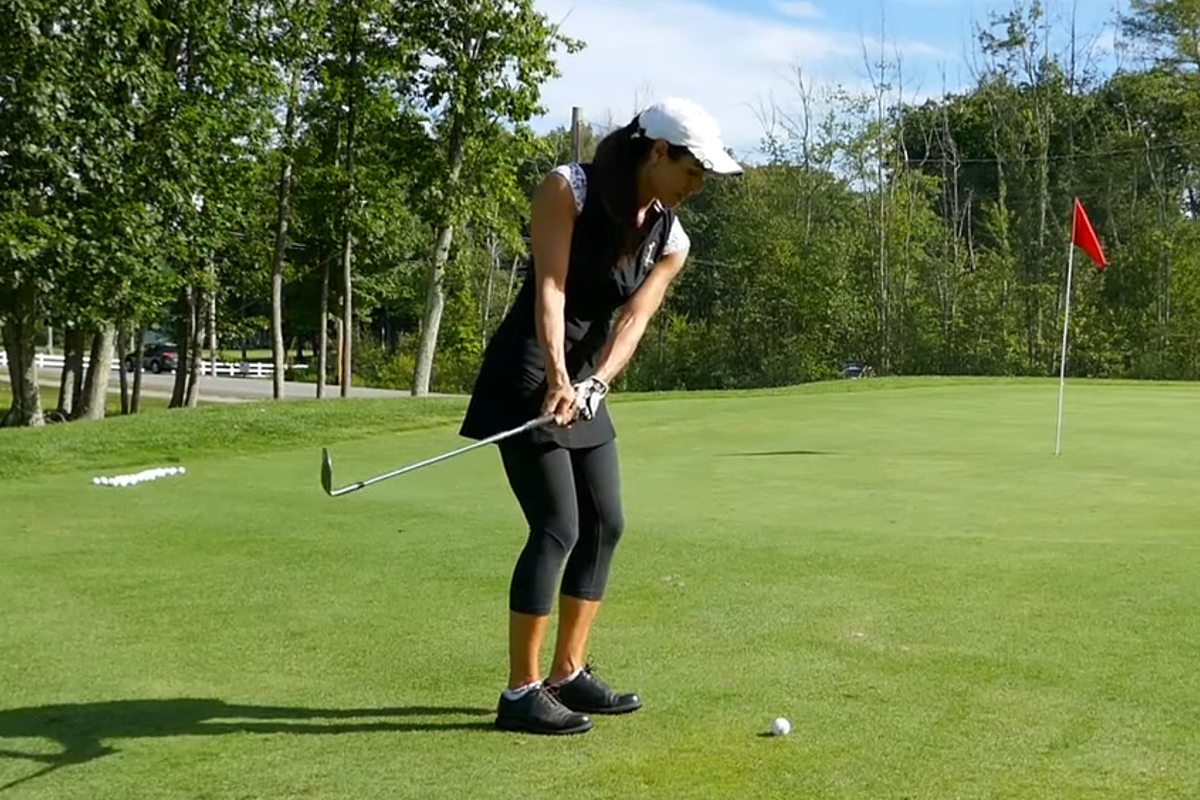
- The Finish: Hold your follow-through position. Make sure your hands stay low past your thighs, the clubhead stays close to the grass, and your lead wrist remains perfectly flat.
The Ball-Toss Visualization
Short game is all about feel, not just mechanics. To lock in the right tempo:
- Take a few golf balls in your hand, look directly at your target, and simply toss them toward the hole using an underhand motion.
- Pay attention to the natural rhythm, the extended backstroke, and the smooth follow-through of your arm. Step up to your club and replicate that exact same unthinking, fluid sensation.
FAQ
Q: How can I tell if I am actively flicking during my standard chips?
A: Have someone watch your swing or check your own finish. If your arm recoils sharply after impact, or if your hands finish incredibly high with bent wrists, you are flicking the club. A proper chip features low hands, a flat wrist, and a clubhead held low to the turf.
Q: What muscle groups should be doing the actual work instead of my hands?
A: Your hands and wrists should remain completely passive, acting simply as a soft connection to the grip. The entire movement should be powered by your midline and core. When your center rotates smoothly, the clubhead stays low to the ground and allows the ball to naturally slide up the lofted face.
Next lesson in this chipping series: What Club Should I Choose for this Chip?