


Lesson Notes: Adjusting for Firm, Tight Bunker Lies
The Goal: To successfully execute greenside bunker shots when rainy conditions or sparse sand create a very hard, firm surface underneath the golf ball.
The Challenge of Firm Sand
- Lack of Cushion: When bunkers are wet or thin, there is minimal fluffy sand below the ball.
- The Bounce Trap: Relying on a traditional open-faced bunker shot uses the “bounce” of the wedge, which can deflect off hard sand and cause a skull or a blade.
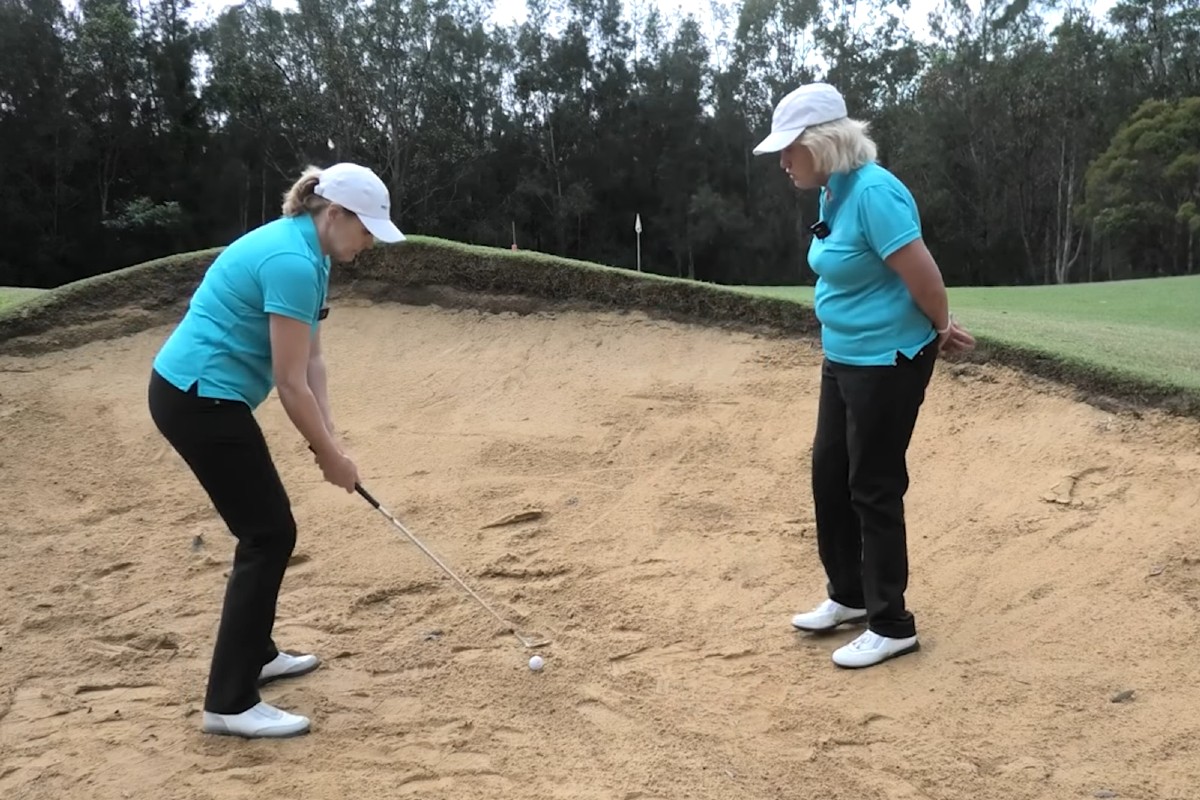
Setup Adjustments for the Leading Edge
- Ball Position & Feet: Since you are greenside, keep the ball positioned forward in your stance and dig your feet into the sand for stability.
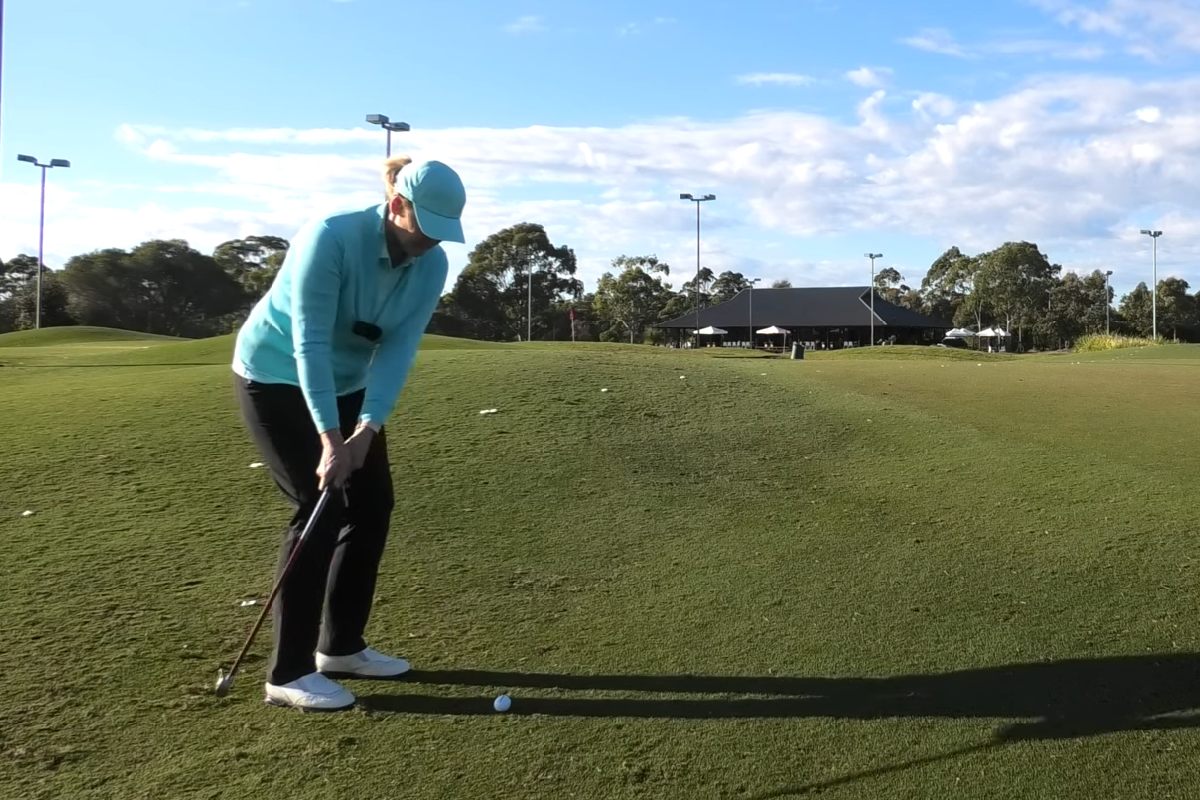
- Target Lean: Lean your entire body weight and upper spine noticeably toward the target.
- Lower the Lead Shoulder: Intentionally drop your lead shoulder lower than usual at address.
- Shaft Lean: Match your body lean by leaning the club shaft forward toward the target. This crucial alteration ensures the sharp leading edge of the wedge points down to penetrate the hard ground.
The Execution & Expected Ball Flight
- Hit Down: Maintain your forward lean throughout the swing and hit down assertively into the compacted sand.
- Lower Launch & Extra Roll: Because the leading edge is engaged and the shaft is leaning forward, the ball will naturally fly out lower and roll out further than a standard soft sand shot.
- Course Management Strategy: To counteract the lower launch, you can switch to a higher-lofted wedge (like a lob wedge) or simply alter your aim point to target an area on the green that leaves plenty of room for the ball to run out.
FAQ
Q: Why do we want to use the leading edge instead of the wedge’s bounce in firm sand?
A: In soft sand, the curved bottom (bounce) of the wedge keeps the club from digging too deep. But when sand is hard or packed tight, that bounce acts like a skid plate, causing the club to bounce upward into the middle of the ball. Using the leading edge allows the club to act like a chisel, cutting beneath the ball despite the hard surface.
Q: Will this adjustment cause the ball to spin less when it lands on the green?
A: Yes. Delofting the club via forward shaft lean reduces height and spin. This is why planning for a lower trajectory and a longer rolling finish is essential to keeping the ball close to the pin.