

Lesson Notes: Controlling Distance on Pitch Shots
The Goal: To easily regulate the carry distance of your pitch shots by monitoring and altering the physical size of your swing sequence.
The Core Principle
- The Next Step: Once you become proficient at creating clean, solid contact with your pitching motion, distance control becomes your primary focus.
- Backswing Length Over Effort: The easiest and simplest method to regulate distance is tracking how far back you swing the club, rather than altering how hard you try to hit the ball.
- Natural Speed: When you increase the physical size of your golf swing, the clubhead speed increases completely naturally without forcing it.
The Three-Tier Distance System
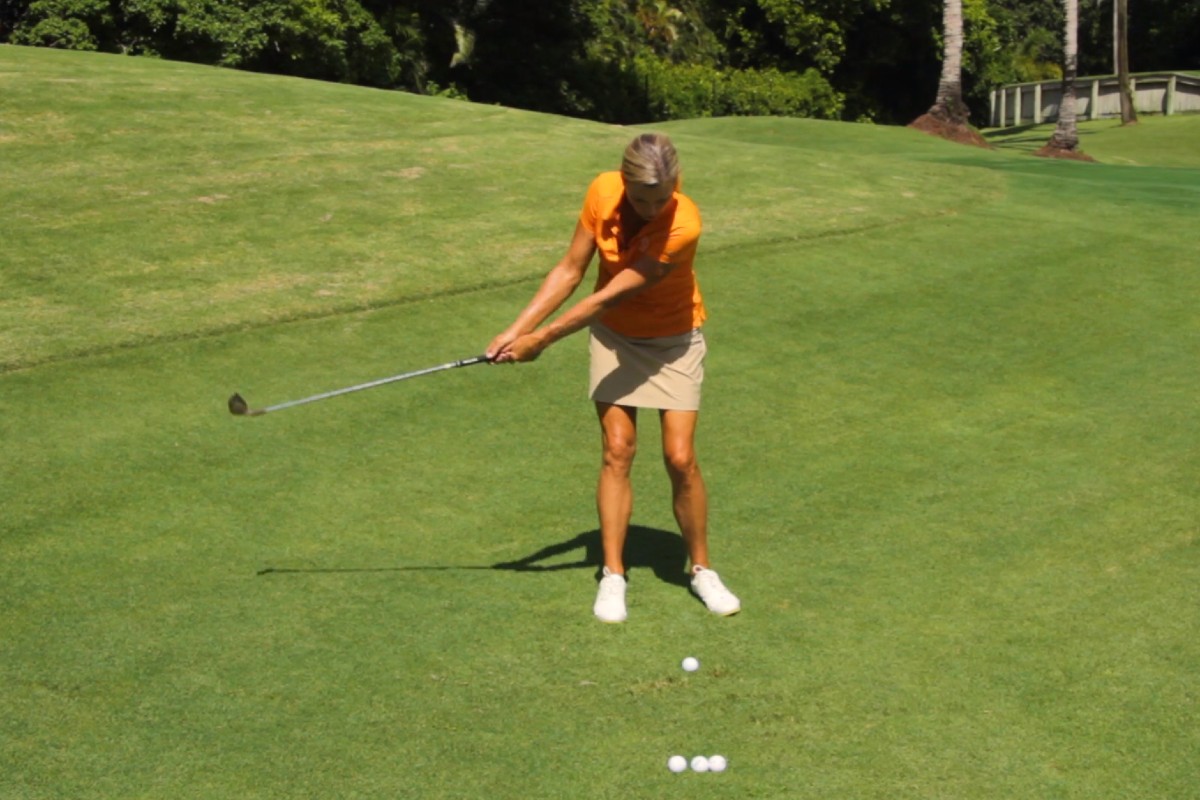
- 1. Shorter Distance (e.g., Five Steps Away): Maintain your proper golf posture and full swing grip. Execute a very small backswing that stops below hip level, focusing on brushing the grass through impact.
- 2. Medium Distance: Utilize the identical setup and grip, but allow the club to move a bit farther back on the takeaway. Ensure that you let the club swing through to an equally sized finish on the follow-through.
- 3. Greater Distance: To send the ball maximum pitching distance, construct a much larger overall backswing arc. The expanded swing track generates the necessary speed to launch the ball higher and carry it further.
FAQ
Q: Why should I change my swing length instead of just swinging my hands faster or slower?
A: Trying to manually control speed with your hands requires perfect, microscopic timing. It often results in deceleration (quitting on the ball) or over-accelerating, which causes skulling or chunking. Altering the backswing length allows momentum and physics to handle the speed change automatically.
Q: Should my through-swing match the size of my backswing on short pitches?
A: Yes. When you allow the club to swing back a certain distance, you want to let it swing through equally on the other side. A symmetrical motion promotes a smooth, unforced tempo and highly consistent contact.