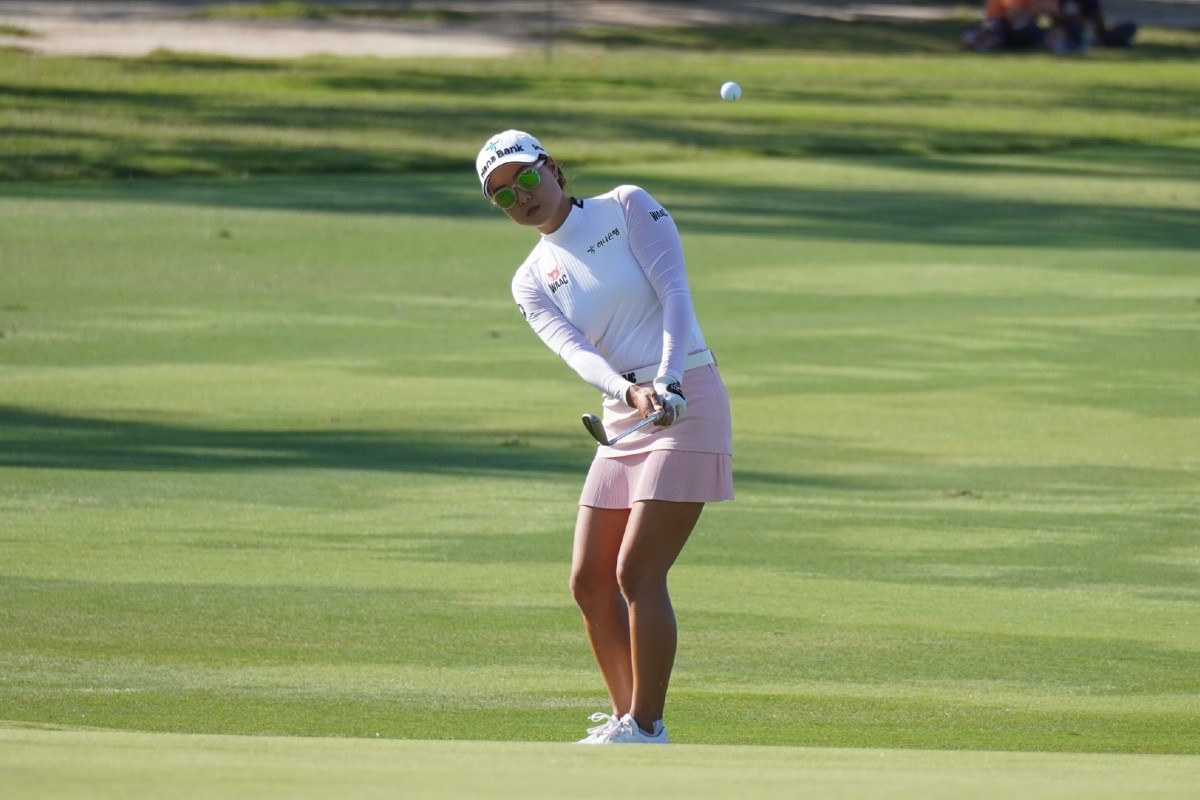
If you can hit more greens in regulation, your score will hopefully reflect more birdies. This certainly will help you shoot lower rounds. But if you can get up and down (meaning playing your ball up near the hole and down into the hole in two strokes) 70 percent of the time, you will lower your scores.

First, if you can putt, always putt.
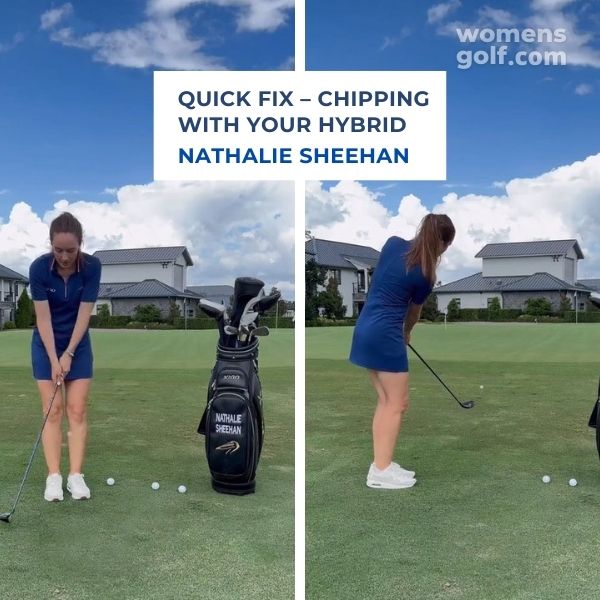
The sooner you can get the ball on the ground rolling towards the flag, the better and there is less chance for error. If the grass is too high in front of your golf ball, simply choose a club that will lift the ball over it. This is a chip or a “lofted putt”. Your plan is to carry the trouble that is tough to putt through and get it on the better “stuff” (the green) to roll to the hole.
On a chip shot, you are trying to think in terms of minimum airtime, maximum ground time.
This is the opposite of a pitch shot where you are creating a shot that has maximum airtime, minimum ground time. The pitch requires a bit more motion and hinging action whereas a chip is a swing executed like a putt…little or no body action and little or no wrist hinge. Your plan is to pick a spot to land the ball to carry the trouble and let the ball roll to the hole from there. Your landing area is a spot that carries the front edge of the green comfortably as you would prefer to not have to land it on the fringe as it could take an unusual bounce, unless there is little green to work with.
The amount of roll you get is determined by the amount of loft on the clubface.
To simplify this, use a sand wedge for a short roll, a pitching wedge for a slightly longer roll, a nine iron for one that is a bit longer, and so forth. Once you have the chosen club in hand, rehearse the length of backswing needed to hit the landing area and TRUST that it will roll to the hole. A small swing that is executed like a putt will create this “lift” as your club will brush grass, allowing the ball to climb the clubface. If you do not chip the ball in, you will make the “second” putt as you will be close and therefore can get up and down easily.
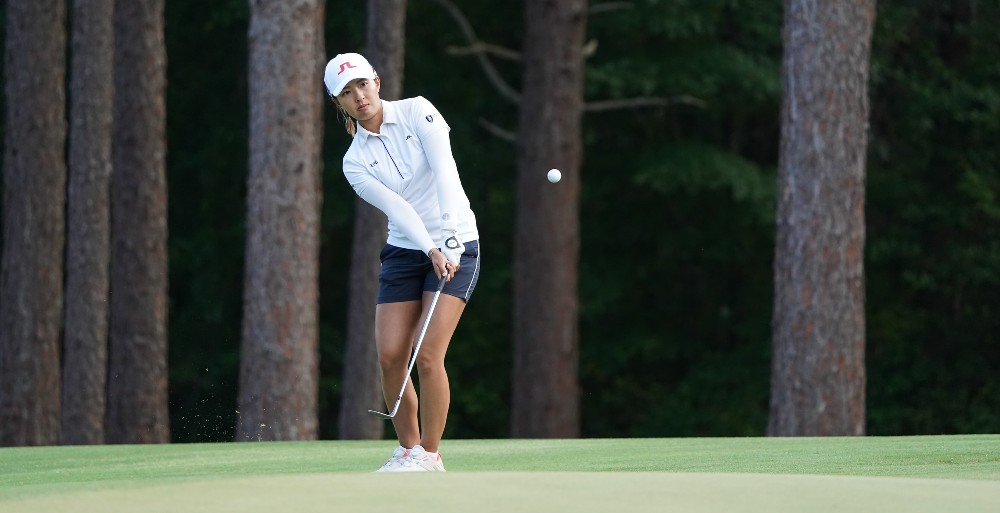
As you move away from the green, you are farther away and need more carry.
Since you need more carry, you need a longer backswing. With a longer backswing, comes a faster moving ball. With a faster moving ball, you need additional loft on the clubface to help the ball come to a stop. Thus, even though the distance you have to the flag might indicate a longer chip with, it is likely you will use pitching, gap, and sand wedge for a pitch and run shot. Your “bulls-eye” landing area is farther away and you want to cushion the landing a bit so that the ball won’t run off the green. Using a more lofted club helps.
Although this seems confusing, experiment with your clubs and test the carry and roll of each club from a variety of distances. You will sense that as you move away from the green, your shot may go from chip to pitch and run to pitch depending on how much green you have to work with and how far away you are from the flag. Improve in this area and you will surely “chip away” at your score!
Feature Photo: 2022 US Women’s Open Champion Minjee Lee at the 2022 DIO Implant LA Open. Photo Ben Harpring



















![Ready to get your game in shape] popup](https://womensgolf.com/wp-content/uploads/2025/12/Ready-to-get-your-game-in-shape-popup.jpg)