




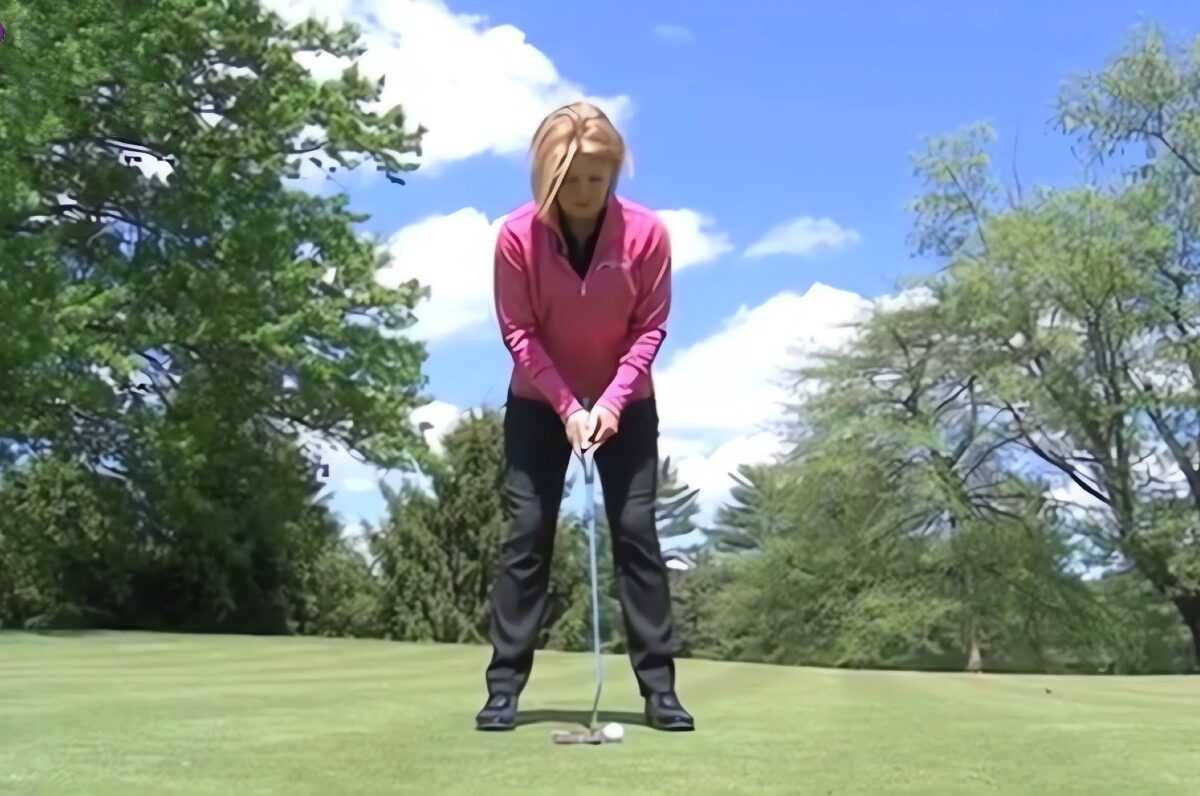
Lesson Notes: The 1-2-3-4 Putting Formula
The Goal: To simplify your putting stroke by identifying the three body parts that must remain entirely motionless, leaving exactly one area to manage the swing movement.
Three Areas to Keep Still (1, 2, and 3):
- The Lower Body: Your legs and hips should have zero lateral sway or rotation. Imagine stepping into a garbage pail, tilting forward into your posture, and having cement poured in to completely lock your base.
- The Wrists: Any flicking or breakdown in the wrists changes the face angle. Keep them quiet and firm.
- The Head: Keep your head perfectly steady through the entire stroke to preserve your view of the line and impact.
The One Area That Moves (4):
- The Shoulders & Upper Back: Your shoulders and upper back should be the sole engine creating the back-and-forth pendulum motion.
The Practice Drill for Quiet Wrists:
- Take your normal lead hand and place it at the very bottom edge of your putter grip.
- Let the top part of the grip rest flat against the inside of your lead forearm.
- Bring your trail hand (stronger hand) in to clamp the grip and your forearm firmly together. This physical connection prevents the wrist from hinging or breaking down during practice swings.
FAQ
Q: How does a moving lower body affect my putting accuracy?
A: When your hips or legs sway, it shifts the bottom arc and path of your putter. Locking your lower body creates an unmoving, anchored foundation so your upper body can swing on a reliable line.
Q: Can I use the forearm grip check during an actual round of golf?
A: This specific cross-handed lock is an exceptional drill for building muscle memory on the practice green. While some players find success using variation styling on the course, its primary goal is to teach your mind what completely motionless wrists feel like.




